Employee recognition often becomes manual, inconsistent, and easy to forget. Not because companies don’t care about their people: they value their work, but there’s no easy way to show it.
Without a clear system, recognition can depend on which manager remembers on a given day, which team is loudest, or which moments feel ‘obvious’ enough to celebrate.
Over time, good work can go unnoticed – even when managers and HR teams have the best of intentions.
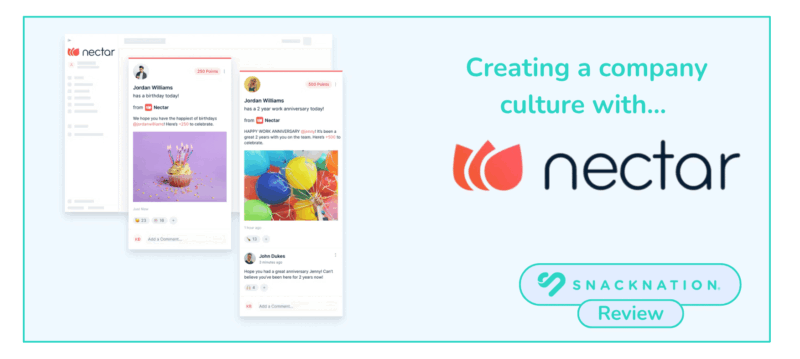
That’s where Nectar comes in. It gives teams a central place to recognize great work, redeem meaningful rewards, share internal updates, and listen to employee feedback. In other words, it helps companies build a working culture people actually want to be part of.
TL;DR |
|
| Best For: | HR and People teams at growing companies that want recognition, rewards, comms, and feedback in one place. |
| Best Fit: | Companies with 50+ employees, especially remote, hybrid, or digital-first teams. |
| Biggest strengths: | Everyday recognition, automation, rewards, employee comms, employee listening, Slack/Teams/HRIS integrations. |
| Watch-outs: | Likely overkill for very small teams, not ideal for one-off gifting, may be harder to use effectively in frontline-heavy environments without established digital channels |
What Is Nectar?

Nectar is an employee recognition, rewards, internal communications, and employee listening platform built for HR and People teams.
At its core, Nectar helps companies make appreciation more visible. Employees can recognize each other’s work, managers can celebrate key moments, and teams can redeem rewards that feel more meaningful than a quick “thanks” lost in Slack.
But Nectar has also grown beyond simple recognition software. Its wider Culture Suite brings together recognition, rewards, company updates, announcements, surveys, and feedback tools, giving organizations a more consistent way to build culture across remote, hybrid, and in-office teams.
In short, Nectar is designed to help companies recognize great work more often, reduce manual HR admin, and create a workplace where employees feel seen, heard, and connected.
Here’s a breakdown of Nectar’s products, and how they fit into the wider Culture Suite:
Product |
What It Does |
| Recognize | Helps employees and managers recognize great work, celebrate milestones, reinforce company values, and redeem rewards like gift cards, company swag, or custom rewards. |
| Comms | Helps HR and leadership teams create, schedule, send, and track internal announcements across channels like email, Teams, SMS, and Nectar. |
| Listening | Gives organizations a way to collect employee feedback through surveys, eNPS, anonymous responses, and real-time dashboards, turning feedback into visible action. |
| Culture Suite | Combines recognition, rewards, internal communications, and employee listening into one platform for building a more connected, appreciated, and aligned workplace culture. |

Who Is Nectar For?
This review is for HR managers, People Ops leaders, employee experience teams, and business leaders who want recognition to become the norm rather than the exception.

Nectar is likely to make the most sense for growing companies with at least 50 employees, especially if recognition, rewards, internal updates, or employee feedback is starting to feel too manual to manage individually.
It’s particularly well-suited to organizations that want to:
- Make peer-to-peer recognition easier and more visible
- Recognize employees across remote, hybrid, or multi-location teams
- Automate birthdays, work anniversaries, nominations, and service awards
- Tie recognition back to company values
- Give employees more meaningful reward options
- Improve internal communications and employee listening from one platform
Nectar supports a wide range of industries, but the use case looks slightly different depending on
on the workforce:
Industry |
How Nectar Can Help |
| ✏️ Education | Helps schools and education teams recognize teachers, admin staff, custodians, tech teams, and other employees without adding more manual work to already busy schedules. |
| 🏦 Financial Services | Supports recognition, retention, and team connection in firms where trust, consistency, and long-term advisor or agent development matter. |
| 🏥 Healthcare | Gives healthcare teams a way to recognize nurses, caregivers, clinicians, and support staff across shifts, locations, and high-pressure environments. |
| 🏨 Hospitality | Helps managers recognize service excellence, automate milestones, and keep teams connected across front desk, kitchen, floor, and back-of-house roles. |
| ⚙️ Manufacturing | Supports recognition across shifts, production lines, warehouses, and job sites, with options like mobile access and kiosk mode for non-desk workers. |
| 📺 Marketing & Advertising | Helps agencies celebrate client wins, creative contributions, cross-team collaboration, and fast-moving project work. |
| 👕 Retail | Gives store teams, regional managers, and frontline employees a way to share recognition, communicate updates, and celebrate great service across locations. |
| 💽 Technology | Works well for digital-first, remote, hybrid, and global teams that want recognition and rewards to fit into tools like Slack, Teams, Outlook, and HRIS platforms. |
That said, the right fit depends less on industry alone and more on how your team works already.
Nectar is strongest when employees are used to using shared digital channels like Slack, Microsoft Teams, email, or an HRIS system.
For frontline-heavy teams or organizations without established digital communication habits, the platform may still be useful, but adoption will likely need more planning

My Honest Review of Nectar
My overall impression is that Nectar works best when it’s treated as a culture platform, not just a rewards tool.
The recognition and rewards features are the obvious starting point. Employees can give peer-to-peer shout-outs, managers can celebrate key moments, and teams can redeem rewards that feel more meaningful than a brief ‘thank-you’ in a 1:1 meeting.
But what makes Nectar more interesting is the way it connects recognition to the wider Culture Suite. The platform supports internal communications, employee listening, milestones, nominations, and values-based recognition.
That matters because recognition rarely exists in isolation. If employees feel overlooked, there are often communication gaps, inconsistent manager habits, or feedback loops that are not working as intended.

Nectar gives HR and People teams a way to make appreciation more visible and repeatable. That’s useful, especially for growing teams where informal recognition can become patchy as the company scales. This often results from a lack of visibility rather than a lack of effort.
That said, Nectar is not magic. It can make recognition easier, more consistent, and more visible, but it still needs leaders and managers to participate genuinely. A platform can create the structure. But it can’t manufacture sincerity.

Pros
Nectar makes recognition easier to repeat.
The biggest advantage is that recognition becomes part of a system rather than something managers have to remember manually. Peer-to peer shout-outs, manager recognition, birthdays, anniversaries, nominations, and rewards can all become more consistent.
It connects recognition to company values.
This is one of the more useful features because it stops recognition from becoming random praise. When shout-outs are tied to specific values, employees can see which behaviors the company actually wants to encourage and repeat them.
The rewards are flexible.
Gift cards, swag, custom rewards, charitable giving, and other options give employees more choice. That makes rewards feel more personal than a generic perk selected by HR. Not everyone wants a branded hoodie.
It works well for remote, hybrid, and multi-location teams.
Recognition is easier to miss when people are not in the same room. Nectar gives distributed teams a shared place to celebrate work, keep up with updates, and feel more connected.
The Culture Suite gives it more depth.
The combination of Recognize, Comms, and Engage makes Nectar more useful than a standalone recognition tool.
It can reduce manual HR admin.
Automating milestones, service awards, announcements, and recognition programs could save HR teams a lot of time, especially once a company reaches the point where informal processes stop scaling.
Cons
It may be overkill for very small teams.
If you have fewer than 50 employees, Nectar may be more platform than you need. Smaller teams can often manage recognition manually, at least until the process starts becoming inconsistent or too much work for HR.
It is not built for one-off gifting.
If you only need holiday gifts, conference swag, or a one-time employee appreciation campaign, Nectar probably is not the cleanest fit. It makes more sense as an ongoing culture and recognition platform.
Frontline-heavy teams may need a stronger rollout plan.
Nectar can support industries like retail, healthcare, hospitality, and manufacturing, but adoption may depend on how easily employees can access shared digital tools. Teams without regular access to Slack, Teams, email, mobile apps, or kiosk-style access may need more planning.
Pricing may require a conversation.
Nectar does provide pricing information, but companies may still need to speak with the team to understand the right package, add-ons, and total cost for their specific needs. That is not unusual for HR software, but it is something buyers should expect. Cost-sensitive teams might prefer manual recognition.
It still depends on leadership behavior.
This is true of any recognition platform. Nectar can support a stronger culture, but it cannot replace genuine manager engagement, thoughtful communication, or meaningful follow-through on employee feedback.
Conclusion
Nectar is a strong option for HR and People teams that want recognition to become more consistent, visible, and connected to the wider employee experience.
Its biggest strength is that it gives appreciation, communication, and feedback a shared home. For growing companies, especially remote, hybrid, multi-location, or fast-moving teams, that structure can make recognition feel less manual and more natural.
I would not recommend Nectar for every organization. Very small teams, one-off gifting needs, and workplaces without shared digital habits may want to think carefully before committing.
But for companies that are serious about building a culture where employees feel recognized, heard, and connected, Nectar is well worth a closer look.